We adhere to the Archdiocesan Safeguarding Policy
The Patriach of Antioch
Today, the Eastern Orthodox Church recognises nine patriarchates: Ecumenical, Greek-Antiochian, Russian, Romanian, Georgian, Greek-Alexandrian, Greek-Jerusalem, Serbian and Bulgarian. Due to the recent growth of Orthodoxy, the patriarchs have set up jurisdictions in various regions around the globe called Archdiocese. Our church is currently under the authority of the Antiochian Archdiocese of the British Isles and Ireland lead by his Eminence Metropolitan Siluoan. Click the top header to check out their beautiful website. Furthermore, our archdiocese is merely one among many under the authority of The Greek Orthodox Patriarch of Antioch and all the East led by his Beatitude, Patriarch John X. Click the link to check out their website.
The Apostolic History of Antioch
The Patriarchate of Antioch traces its beginnings back to Acts 11:26; “The disciples were called Christians first in Antioch”. Beloved 4th century Church Father, St. John Chrysostom comments that this passage demonstrates that Christ’s command to preach the gospel among the Gentiles was first fully realized in Antioch. “It was there for the first time that men were accounted worthy of that name”. In the 1st century, this region was known as Asia Minor and was a cosmopolitan city full of cultural and religious diversity ruled by the Roman Empire. Today, it is known as Turkey. Acts 8:1 mentions great persecution in Jerusalem following the martyrdom of St. Stephen which led many Christians to flee to other regions such as Antioch. It was in Antioch that Peter and Paul zealously preached the gospel, converting many while enduring persecution from Jews, Gentiles and Roman authorities.
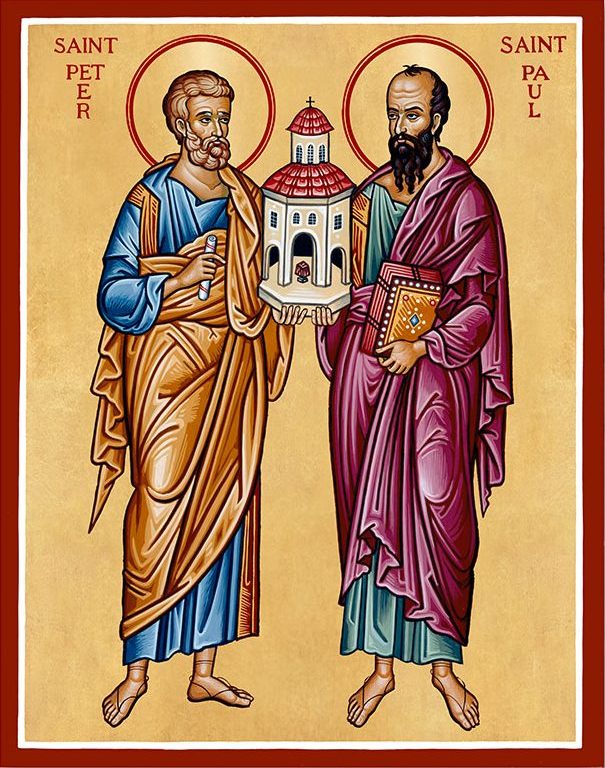
1st Patriarch: The Apostle Peter
The Antiochian Church enjoys a long and rich succession of patriarchates going back from the very inception of Christianity to the present day. The apostolic succession of Antiochian Bishops began with St. Peter who first confessed “You are the Christ, the Son of the living God.” (Matt 16:16). It was on this confession of faith which our Lord Jesus built His church “and the gates of Hades shall not prevail against it” (Matt 16:18). The apostles received the “keys of the Kingdom of Heaven” (Matt 16:19) giving them the authority to ordain bishops. According to tradition, Peter was Bishop of Antioch around 34 AD and remained so for seven years before journeying to western Rome where he became the first Pope of Rome. Unfortunately, the Roman Catholics officially schismed from the Eastern Orthodox Church in 1054 for abuses of power and heresies such as the filioque.
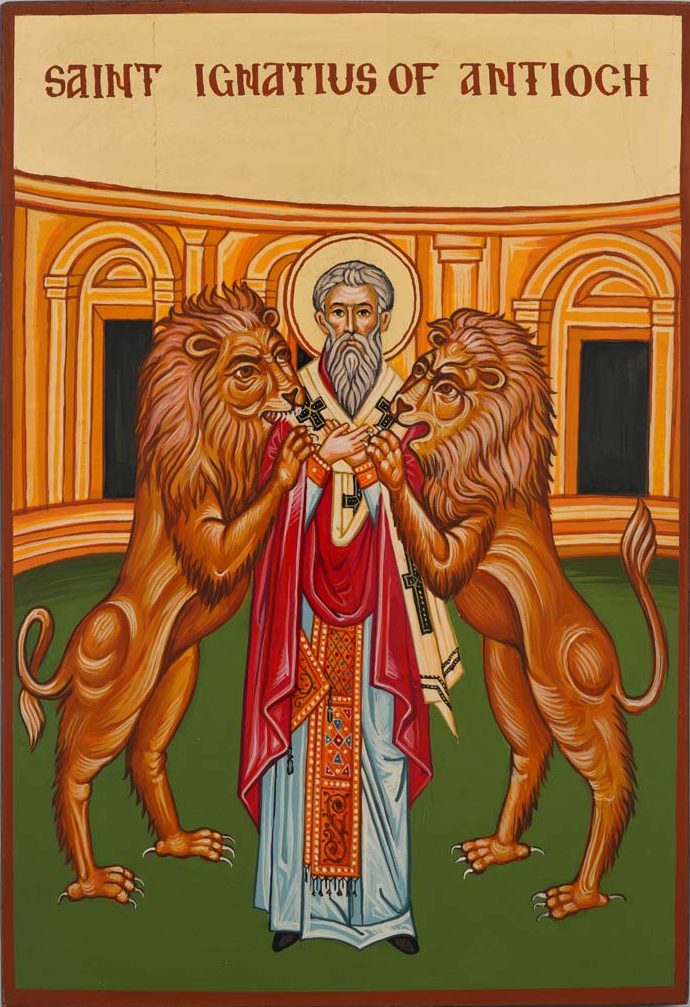
3rd Patriarch: Ignatius of Antioch
Not much is known about Euodius, the second patriarch. However, lots is known about St. Ignatius, the third patriarch of Antioch who was enthroned in the 2nd century. When Jesus said “You must be like little children to enter into the kingdom of heaven” (Matt 18:2-4), tradition holds that the little boy who sat on Jesus’s knee was Ignatius, who would later become the third patriarch of Antioch. He had studied under the apostle, St. John the Divine. He also wrote seven epistles on his way to his martyrdom which are still read today. His letters reveal an early church which was orderly (taking holy communion on Sunday during divine liturgy) with a clear hierarchical structure of presbytery, bishops, priests and deacons – resembling what we still have today – with an emphasis on obeying and respecting these authorities. He fell asleep glorifying Christ after being thrown to lions in the Roman Colosseum.
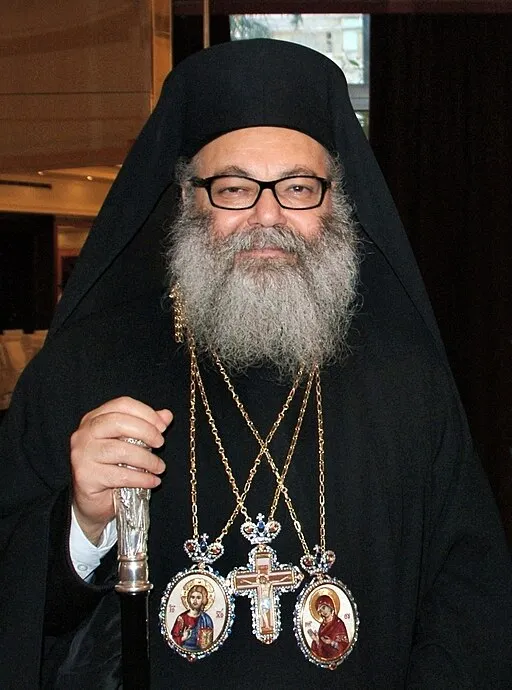
169th Patriarch: John X
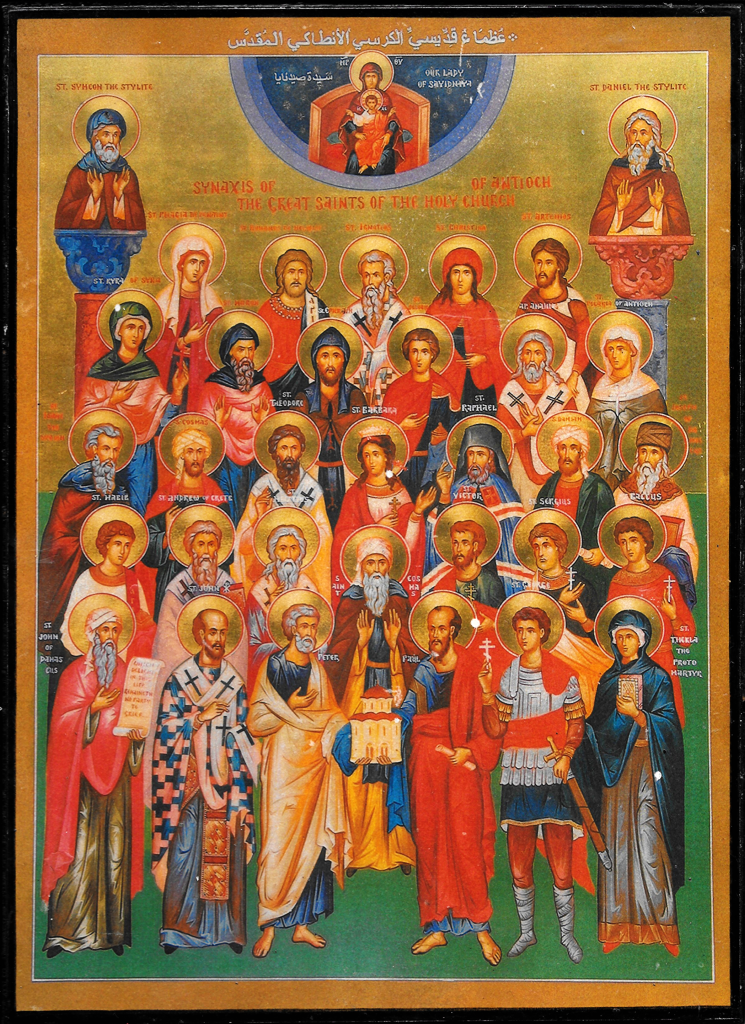
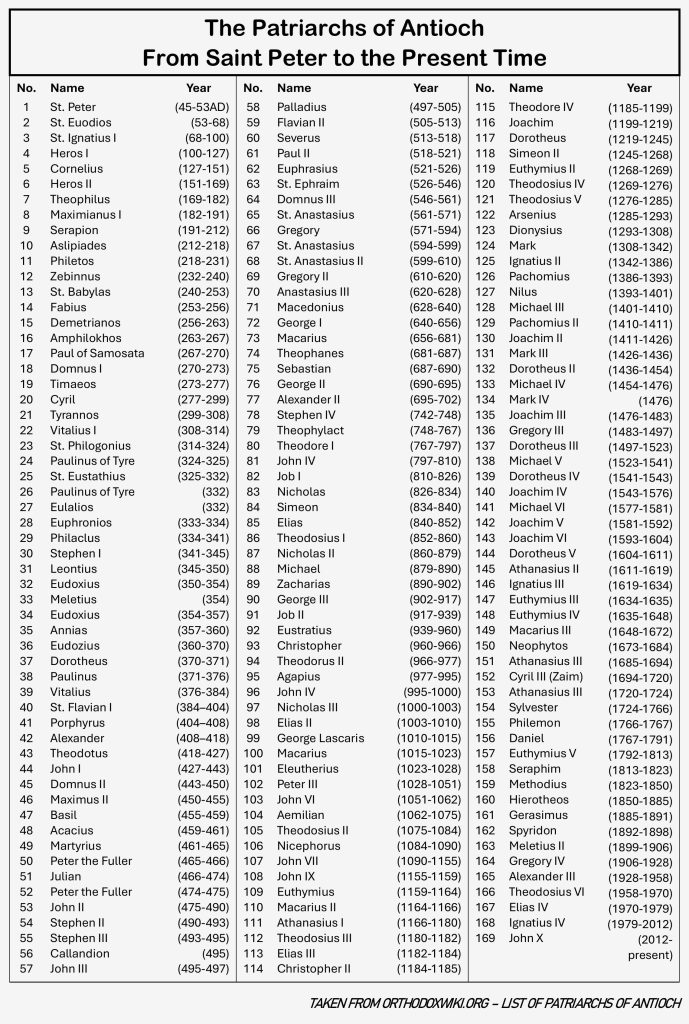
In the 14th century, after the destruction of the city of Antioch, the patriarch moved to Damascus where it still exists today, the 169th patriarch being His Beatitude John X. He was enthroned in 2013 following the repose of His Beatitude Patriarch Ignatius IV in 2012. In 2014, he held the first International Global Antiochian Conference in Balamand which began a process of renewal in Church life. Much of his time with the Holy Synod has been spent working for peace and reconstruction in the beloved and war-torn country of Syria. If you would like to know more about the history of Antioch follow this link to the Antiochian Archdiocese website. Below, on the left, is an icon of the ‘Synaxis of The Great Saints of The Holy Church of Antioch.’ On the right, is a list of all the patriarchs of Antioch from St. Peter to the present time. Please note that any omission or apparent discrepancy in chronological numberings may be due in part to schismatic departure of clergy from the Orthodox faith or wars and conquests in Antioch. Click the image to be taken to Orthodoxwiki.org for more information.