We adhere to the Archdiocesan Safeguarding Policy
Who was Saint Fursey?
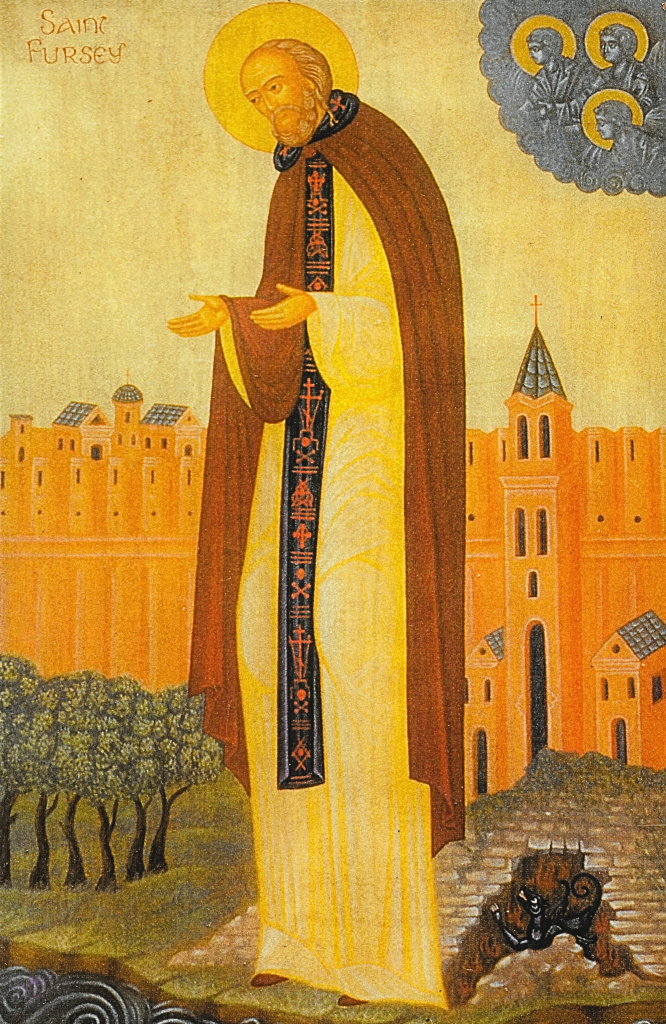
Born around 567 AD, the patron saint of our parish – Fursey was a Scottish noble who was born and grew up in Ireland. Most of his life is recorded in the 8th century manuscript “Transitus Beati Fursei”. According to the venerable Bede – another 7th century English saint – “From the very time of his boyhood he displayed no small energy in sacred reading and monastic discipline.” The manuscript also describes him as “excellent in figure… devout in mind and affable in conversation… steadfast in discernment of justice, thoughtful in charity”. Throughout his life, St. Fursey received four visions about Paradise, Hades and divine judgement, usually in a state of severe sickness – though his first two are most notable.
Visions
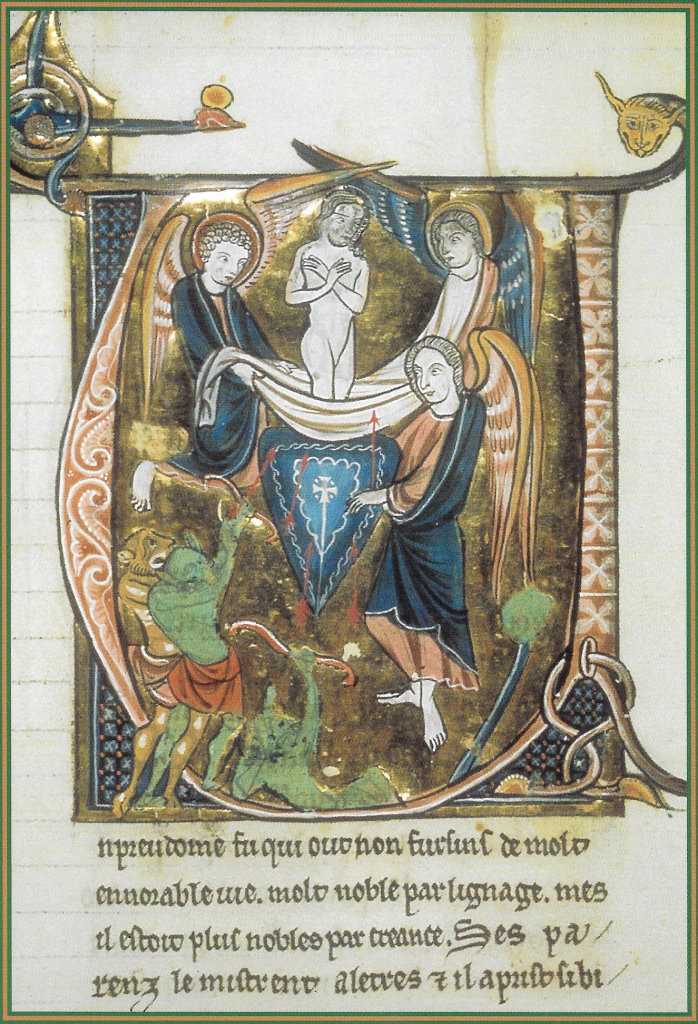
In his first vision he was lifted out of darkness by three luminous beings into a choir of angels singing “The saints shall go from strength to strength: the God of gods shall be seen of them in Zion”. Three days later he received his second vision, in which they took him down into Hades where he saw an army of demons waging war against God. He described them as filled with ugliness, filthiness, long-necked with faces covered by a darkness too malign to bare. Though the fiends shot fiery darts, the three angelic hosts shielded him. Then Satan arose and quoted scripture in order to condemn him on idle talk, unforgiveness, lack of innocence and lack of charity. But at each accusation, the holy angels reproved the evil one who, in anger, called God unjust that a sinner should be saved.
Then, St. Fursey perceived below four great fires in the air rising from a valley of darkness. These were fires which consume sinners who had been baptised but had made no effort in the spiritual life. The first was kindled by lying, because at baptism we promise to renounce the works of Satan. The second (lit by lies) was avarice, kindled by a preference for worldly riches over heavenly ones. The third (lit by avarice) was dissension, stoked by a lack of fear of offending the souls of our neighbours. The fourth (lit by dissension) was mercilessness, stoked by robbing and defrauding the weak. Because Fursey had committed none of these, the fires did not touch him. However, on the way back to his body, a demon in the mist of the fire threw a suffering sinner at Fursey and they locked jaw to jaw. The angel explained ‘had he not accepted a stolen garment from this sinner on Earth, his punishment would not have burned his body.’ Miraculously, Fursey bore the same burn on his bodily jaw and shoulder after the return of his soul.
A Monastery in East Anglia
After the angels had healed him from his illness and treated his burn, he preached repentance in Ireland for ten years, he also healed the sick and possessed. However, perceiving that men became envious of his spiritual gifts, he moved with his brethren to East Anglia. There, he was honoured by King Sigebert of the East Angles and he tamed the hearts of barbarians with the word of God. Thus, the king gave him the ruins of an old Roman fortress to build his monastery. Today, Christian pilgrims still come to Burgh Castle to see the site. Nearing the end of his earthly life, Fursey became a reclusive hermit for a whole year, entrusting his monastery into the hands of his brother St. Foillan. Later on, his other brother St. Ultan joined him in his hermitage. In his last years, the two brothers sailed to Gaul where he was again received with honour by Chlodoric, King of the Franks where he built another monastery in a place called Latiniacum. Taken by sickness, he fell asleep in the Lord around 650 AD. His immaculate body underwent no corruption for many years. We celebrate our beloved Father Fursey’s feast day using the new calendar on 16th January for his spiritual insights, immaculate character and preaching the gospel throughout Ireland and East Anglia. According to the venerable Arsenius of Paros – 19th century confessor and miracle worker – “The Church in The British Isles will only begin to grow when she begins to again venerate her own Saints”. With God’s help, we the faithful at St. Fursey’s aim to fulfil his prophecy.
The Troparion of St. Fursey - Tone 5
Establishing thy monastery in a Roman fortress,
Thou did teach men that the Orthodox faith is a true bastion,
Against the onslaughts of every evil force, O’ Father Fursey.
Wherefore pray to God for us,
That we all may be bastions of the faith,
Standing firm against the rising tide of falsehood.
That our souls may be saved.
The Kontakion of St. Fursey - Tone 4
Thou didst need the walls of stone to defend the Faith against its pagan enemies, O Father Fursey,
But pray for us that we may have a spiritual wall around us to defend the Faith against its enemies.
Following thee and praising thy eternal memory,
We stand firm against every error, ever singing:
Rejoice, beloved of God, our Father Fursey.